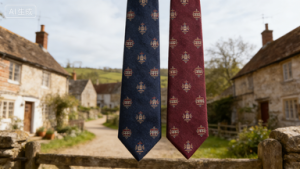
For anyone in the custom tie business who works with Japanese customers, one thing is crystal clear: this is a group that values **quality, detail, and cost-effectiveness** above all else. Every decision they make—from fabric selection to stitching precision—reflects a pursuit of balance between excellence and practicality. If you want to meet their expectations, you need to understand these core priorities inside and out. First and foremost, product quality and meticulous details are non-negotiable. Japanese customers have an eye for the smallest imperfections that others might overlook. They pay close attention to stitching neatness—loose threads, uneven seams, or misaligned patterns are instant deal-breakers. The cutting of the tie blade must be precise, ensuring symmetry when knotted, and the lining material should be sturdy enough to maintain the tie’s shape over repeated use. Even the choice of thread matters: it should be durable yet soft, avoiding any rough texture that could irritate the neck. For custom orders, whether it’s a logo-embroidered corporate tie or a school emblem tie, the positioning of the design must be accurate to the millimeter—no deviations are tolerated. This focus on detail isn’t about being picky; it’s about respecting the craftsmanship of a product that will be worn as a symbol of professionalism or identity. Second, **material quality is a top priority, with mulberry silk being the gold standard. Japanese customers have a strong preference for natural, premium fabrics, and mulberry silk ties are their first choice. They appreciate silk’s luxurious sheen, soft touch, and breathability—qualities that make it suitable for both formal business settings and special occasions. A high-quality mulberry silk tie not only looks elegant but also drapes perfectly, holding its knot without slipping. In contrast, polyester ties have minimal demand in the Japanese market. Synthetic fabrics are often associated with low durability and a cheap, shiny appearance that clashes with the understated sophistication Japanese customers favor. Novelty ties with overly bold textures or unconventional materials also fail to resonate—this market values timelessness over trendiness when it comes to tie fabrics. Last but equally important, **cost-effectiveness is key**. For Japanese customers, “affordable” does not mean compromising on quality. Instead, it means getting the best possible value for their money. They are willing to invest in a premium mulberry silk tie, but only if the price aligns with the craftsmanship and materials used. Overpriced products with subpar details will be rejected immediately, just as cheaply made ties with low-quality silk will be dismissed. What they want is a transparent pricing structure: a clear correlation between the cost, fabric grade, stitching technique, and customization complexity. For bulk orders—such as corporate uniforms or school ties—they expect reasonable wholesale prices without sacrificing any of the quality standards. This balance of quality and cost is what defines “value” for Japanese customers. It’s worth noting that **polyester and novelty ties have limited appeal** in this market. These products are seen as temporary, disposable items that lack the longevity and elegance of silk. Unless the order is for a very specific, low-budget casual use case, Japanese customers will rarely opt for synthetic materials. Novelty designs, while fun, are not considered suitable for formal or professional settings—the primary scenarios for custom tie orders. In summary, Japanese customers approach custom tie orders with three core concerns: uncompromising quality and attention to detail, premium natural materials (especially mulberry silk), and genuine cost-effectiveness. For businesses looking to serve this market, the key is to prioritize craftsmanship, source high-quality silk fabrics, and offer transparent, value-aligned pricing. By meeting these standards, you won’t just fulfill an order—you’ll build a relationship based on trust and respect for what Japanese customers truly value. Are you ready to deliver custom ties that meet the exacting standards of Japanese customers? Focus on the details, choose the right materials, and balance quality with cost—that’s the formula for success. Would you like me to add **specific examples** of quality checks for silk ties that resonate with Japanese customers?

Related posts

What are the different silk used in custom necktie?
March 24, 2026
What is the Russian client prefer when custom ties?
January 11, 2026Top 5 Popular Tie of 2021. What about 2022?
November 25, 2025